
How is Hardwood Log Charcoal Made? What Are the Three Production Methods?
In fact, the process is not complicated. There are three main mature production methods.
The quality of log charcoal mainly depends on the type, density, and moisture content of the raw wood, while the production method only affects carbon yield, environmental performance, and efficiency.
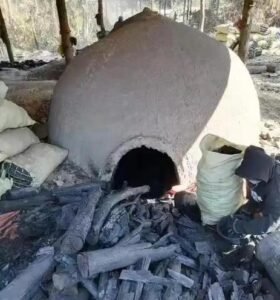
This is the oldest and most primitive charcoal-making method.
Earth kilns are built with soil and bricks, relying on natural burning and anaerobic carbonization.
Heavy smoke, serious pollution, not eco-friendly — banned or restricted in many regions.
Production cycle is extremely long:
entire process takes 10–15 days (from loading, ignition, carbonization to cooling), with cooling alone taking 5–7 days.
It is gradually being replaced by new environmentally friendly carbonization furnaces.
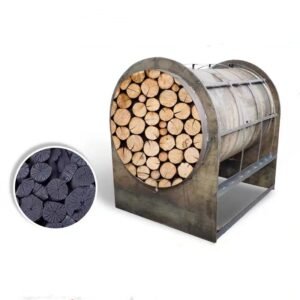
This is the most popular equipment for small and medium-scale production.
It comes in many models and can be customized based on capacity, with prices ranging from a few thousand to tens of thousands of RMB.
The flammable wood gas produced during carbonization is recycled for self-combustion, no extra fuel needed.
Energy-saving, low operating cost.
Carbonization time is greatly shortened — one batch completes within 24 hours.
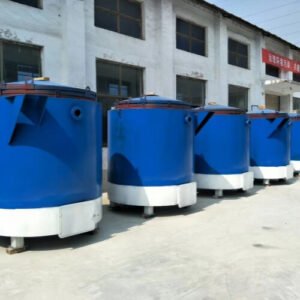
This is high-efficiency equipment for large charcoal factories and briquette production lines.
Multi-purpose: can carbonize hardwood logs, briquettes, shells, bamboo chips, etc.
Fully sealed, smokeless, eco-friendly, supports continuous production.
After carbonization, the inner baskets are lifted out for cooling, while the furnace can reload immediately — no waiting time, extremely high efficiency.