
Continuous Carbonization Machine
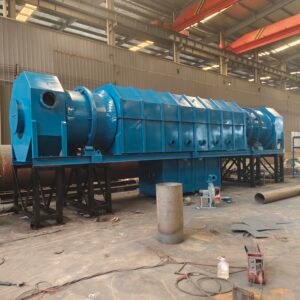
What are the raw material requirements for the continuous carbonizer?
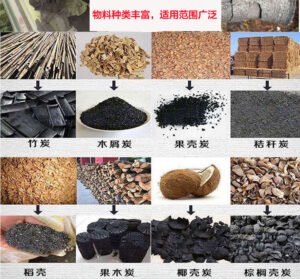
First, raw materials should not be too large or too thick. Generally, the diameter should be no more than about 2 cm (20 mm).
Materials such as coconut shell, eucalyptus bark, palm fiber, and crop straw must be crushed first before carbonization.
However, materials like sawdust, rice husk, walnut shell, olive pit, and hickory nut can be directly carbonized without pre-crushing.
What are the applications of the produced carbon powder?
Carbon powder made from rice husk and sawdust contains essential organic components for soil conditioning and greatly promotes plant growth.
For example, in Northeast China, straw carbon powder has been used for many years to preserve soil nutrients and repel harmful pests.
It is also widely used in mushroom cultivation farms.
Carbon powder is also a key filtering material in water purification systems.
Most household water purifiers use activated carbon powder to filter impurities and improve water quality.
In new homes, charcoal powder is commonly used to absorb formaldehyde, purify indoor air, and eliminate odors.
Advantages of Continuous Carbonization Machine
This machine is an integrated drying and carbonization unit.
It supports 24-hour continuous production with fully automatic temperature control.
The entire process is completely closed and smokeless, fully meeting national flue gas emission standards.
It features continuous feeding and continuous discharging.
Moreover, the machine can collect by-products such as wood tar and wood vinegar during operation.