
Carbonization Furnace Buying Guide
How to Choose the Right Carbonization Furnace
Understand the differences between different furnace models.
Choose according to your actual production needs.
This avoids cost waste and picks the most suitable equipment.
continuous type and intermittent type.
They support non-stop round-the-clock operation.
Intermittent furnaces work in batch mode.
The next production cycle starts only after full charging, carbonization and discharging.
1. Continuous Carbonization Furnace

Feeding, carbonization and cooling run at the same time.
It delivers extremely high production efficiency.
Its output capacity is 5 to 10 times higher than intermittent furnaces.
High automation ensures uniform and stable carbonized products.
It features lower energy consumption in long-term operation.
It also adapts to organic sludge and various raw materials.
It is ideal for large factories and mass production.
Some raw materials need drying treatment before carbonization.
2. Intermittent Carbonization Furnace
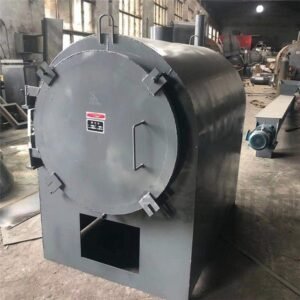
After one furnace carbonization, the machine must stop for cooling.
Workers clean residues before reloading new materials.
Overall working efficiency is relatively low.
Daily maintenance and repair costs are low.
It requires low upfront investment with high cost performance.
It meets small-batch charcoal production demands.
It works well for high-density and low-volatility raw materials.