
Usable Raw Materials for Carbonization Furnace & Common Industry Questions.
Farm straw, fruit shells, wood sawdust and difficult sludge seem worthless.
Yet they contain huge reusable potential.
With professional carbonization furnace treatment, waste turns into valuable goods.
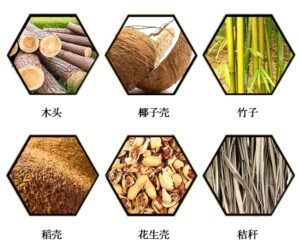
They are converted into high-value biochar to realize waste recycling.
Based on source and characteristics, raw materials are divided into five categories.
Each category has unique advantages and application ranges.
1. Wood-Based Raw Materials
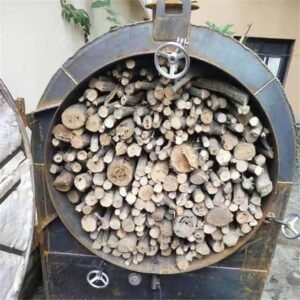
They include wood blocks, wood chips, sawdust and wood processing scraps.
Wood features high carbon content and low impurity content.
Carbonized wood charcoal has high hardness, long burning time and stable heat value.
It is ideal for home heating and outdoor BBQ fuel.
It is also widely used in metallurgy, chemical and industrial carbon scenarios.
2. Crop Straw Raw Materials
Typical materials: corn stalk, wheat straw, rice straw, rice husk and peanut shell.
These materials are easy to collect with extremely low costs.
Carbonized straw charcoal serves as low-cost eco fuel.
It improves soil air permeability and soil fertility for farmland.
It can also be used as bedding in livestock breeding.
It fully realizes circular utilization of agricultural waste.
3. Fruit Shell Raw Materials
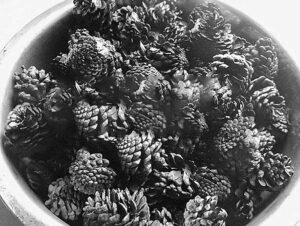
Common materials: coconut shell, walnut shell, palm shell, apricot shell and peach shell.
They own compact pore structure and ultra-low ash content.
After carbonization and activation, they become premium activated carbon.
Widely used in water purification, air filtration and food decolorization.
They bring high added economic value for carbon manufacturers.
4. Bamboo Raw Materials
Bamboo charcoal delivers stronger adsorption than ordinary wood charcoal.
It releases negative ions and far infrared rays during carbonization.
It is widely made into daily supplies such as bamboo charcoal bags and deodorant carbon.
It removes odors, absorbs moisture and brings health benefits.
5. Industrial & Domestic Organic Waste
Such as herbal residue, distiller’s grains, municipal sludge and organic garbage.
These materials usually have high moisture and complex components.
High-temperature carbonization removes moisture and harmful impurities.
They are converted into high-calorie charcoal with qualified emission standards.
It solves waste disposal problems and realizes resource reuse.
Common Market Doubt
Is the waste-to-charcoal project truly profitable?
Are there hidden technical bottlenecks?
Is it merely a marketing gimmick to attract investment?
We will share professional analysis on this key question next.