Is Making Machine-made Charcoal from Sawdust & Rice Husk Waste Profitable? Real Industry Analysis
Many new entrepreneurs planning to enter the charcoal business share one practical question:
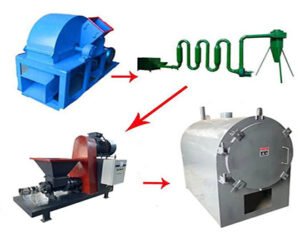
Biomass waste recycling charcoal production line
They have abundant waste sawdust and rice husks, and wonder if these materials can be turned into machine-made charcoal, whether the finished charcoal has stable market demand, and if the project can generate steady profits.
This article delivers objective field-based industry insights without empty marketing claims. It helps new investors grasp market conditions, development prospects and avoid common pitfalls.
First, clear conclusion: Producing machine-made charcoal with sawdust and rice husks is fully feasible. It is the most mainstream and reliable profitable model across the whole industry.
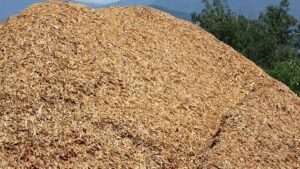
Many beginners do not know the basic production requirement for machine-made charcoal: any waste containing lignocellulose can be processed into qualified charcoal. High-quality whole logs are not mandatory. Wastes widely available at wood factories and farmlands serve as premium raw materials for charcoal production.
1. Wide Range of Waste Raw Materials – Real Waste-to-wealth Recycling
The core profit advantage of machine-made charcoal lies in nearly zero-cost, easily accessible raw materials.
Besides common sawdust and rice husks, agricultural and wood processing residues are all usable feedstock:
In the past, these residues were treated as garbage. Stockpiling occupies large space, open incineration triggers environmental penalties, and factories even spend extra money on waste transportation and disposal.
With a complete charcoal production line, such waste is converted into indispensable commercial and industrial fuel, turning useless scraps into stable cash flow.
Many investors worry charcoal made from waste will have poor quality with no buyers. The reality is the opposite.
Finished charcoal produced from high-grade sawdust and rice husks delivers outstanding performance:
high density, compact texture, easy ignition, smoke-free and odorless combustion, long burning duration and stable calorific value, superior to ordinary log charcoal.
It enjoys huge continuous market demand for barbecue restaurants, street food stalls, domestic heating, boiler heating, silicon carbide plants and other industrial heating scenarios. Sales channels are reliable all year round.
The business can operate sustainably long-term as long as you have sufficient, stable local raw material supply for continuous production.
3. No Technical Barriers for New Starters – Full On-site One-on-one Support
Many beginners hesitate to start due to lack of operation skills and fear of unqualified charcoal output.
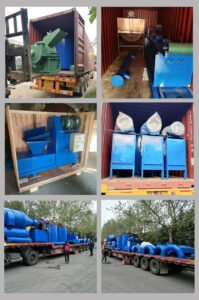
Reputable physical machinery manufacturers provide complete after-sales service instead of abandoning customers after equipment delivery.
As an experienced manufacturer with decades of industry experience, we offer free door-to-door installation and commissioning, plus full hands-on technical training covering the whole workflow: raw material drying, briquette forming, carbonization temperature control and finished charcoal firing management. Zero-basis operators can launch independent stable production quickly without technical worries.
4. Critical Purchase Pitfall for New Buyers: Avoid Ultra-low-price Unqualified Machines, Choose Certified Formal Manufacturers
Important reminder for all new investors: the charcoal equipment market has many irregular suppliers online selling abnormally cheap machines, which lead to huge losses after purchase.
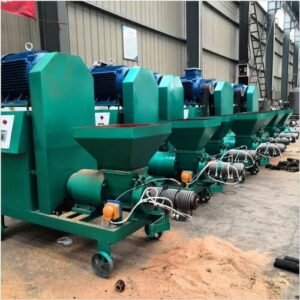
A complete machine-made charcoal project relies on a full matched production line instead of single standalone units. Dryers, briquette extruders, carbonization furnaces and auxiliary machines must be customized according to local raw material moisture, material type, daily output and workshop space.
Most low-price vendors only sell bare single machines without matched auxiliary equipment, technical training or after-sales support. The delivered machines cannot run normally or produce qualified charcoal.
Purchase equipment only from certified professional manufacturers with physical factories and official records. It is wiser to invest slightly more in complete reliable production lines than to chase low prices and suffer heavy losses.
Summary: Waste Charcoal Production Is a Low-cost Stable Profitable Project
Overall, manufacturing machine-made charcoal from sawdust, rice husk and other woody waste features easily accessible low-cost raw materials, stable market demand and low technical threshold. It fits both small family workshop startups and medium-scale mass production.
This is a down-to-earth long-term physical industry with rigid market demand and exaggerated marketing gimmicks. Steady production and strict finished quality control bring considerable stable profits, making it an ideal entrepreneurial project for ordinary investors.