Easiest Method for Rice Husk Carbonization – Practical Advantages of Continuous Rice Husk Carbonization Furnace.
Operators engaged in biomass waste processing and rice husk recycling prioritize simple, high-quality and eco-compliant rice husk carbonization solutions.
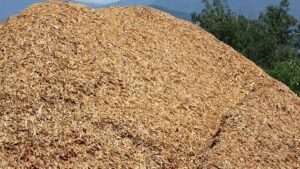
In the past, rice husk charcoal was produced via traditional open burning and sealed earth kilns. This outdated method has extremely low efficiency and relies entirely on personal experience. The finished rice husk charcoal has inconsistent quality with severe over-burnt or under-carbonized products and poor appearance. More importantly, open flue gas discharge violates environmental regulations and is banned for production nowadays.
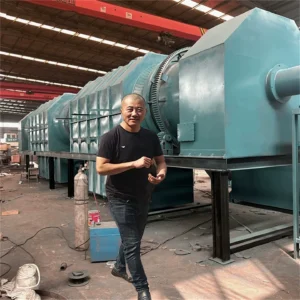
For standardized, large-scale and legal rice husk charcoal manufacturing, the continuous rice husk carbonization furnace is the simplest, most trouble-free and profitable option. Fully automatic mechanical operation delivers energy-saving, eco-friendly, high-yield and stable-quality charcoal, completely replacing old-fashioned processes and becoming mainstream equipment in the industry.
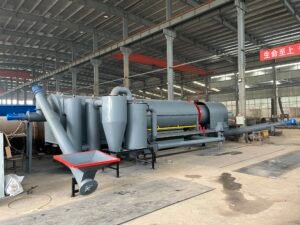
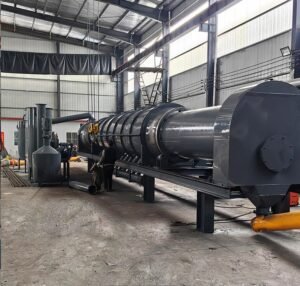
The furnace adopts mature dual-cylinder structure with segmented temperature control and zoned operation. It integrates pre-drying, pre-carbonization, high-temperature dry distillation and cooling discharging into one integrated unit with full automation and minimal manual intervention.
1.1 Front Section: Pre-drying & Pre-carbonization Zone
The front inner cylinder maintains relatively low temperature. Uniformly fed rice husks first undergo complete dehydration drying, followed by low-temperature pre-carbonization. This avoids incomplete carbonization, dark grey defective charcoal caused by damp raw materials and lays a solid foundation for subsequent high-temperature pyrolysis.
1.2 Middle Section: Core High-temperature Dry Distillation Zone
The middle zone is the key high-temperature carbonization chamber with stable high-temperature oxygen-free dry distillation environment, the core condition for premium rice husk charcoal.
Straw Collection & Recycling
Rice husks complete thermal decomposition and stable carbonization to form high-grade biomass rice husk charcoal.
Pyrolysis generates combustible flue gas including carbon monoxide, methane and hydrogen. The built-in flue gas recovery system collects all combustible gas and recirculates it back to the furnace as heating fuel. No extra coal or firewood is required, realizing self-produced fuel circulation and remarkable energy saving.
1.3 Rear Section: Water Cooling & Discharging Zone
Fully carbonized rice husk charcoal is conveyed to the tail water cooling unit. The circulating water cooling system rapidly lowers material temperature and stabilizes discharging temperature at around 60°C. It effectively prevents hot charcoal re-ignition upon air contact and maximizes intact finished charcoal yield.
2. Key Practical Advantages of Continuous Rice Husk Carbonization Furnace
2.1 24-hour Non-stop Production, Stable High Output
This is the biggest highlight of continuous furnaces. Unlike intermittent furnaces that require repeated loading, sealing, cooling and manual charcoal unloading, the machine realizes automatic feeding, carbonization and discharging in a closed loop round the clock. Stable continuous operation perfectly fits mass production and solves low output and discontinuous production of traditional techniques.
Continuous Rotary Carbonization Furnace
2.2 Smoke-free Eco-friendly Operation, Fully Compliant with Environmental Standards
Equipped with complete flue gas recovery and treatment system, all pyrolysis smoke is recycled for secondary combustion without waste gas or heavy smoke emission. It meets local environmental protection standards, eliminating risks of inspection shutdown and rectification.
2.3 Full Automation & Labor Saving, Easy Operation for Zero-experience Operators
One-button start and stop for the whole line with fully automatic mechanical running. No professional technicians are required for on-duty supervision; ordinary workers can operate skillfully after short training. It is the simplest and most worry-free production solution for new rice husk charcoal entrepreneurs.
2.4 Low Energy & Operating Cost, No External Fuel Needed
The furnace relies on self-generated combustible flue gas from rice husk carbonization for circulating heating without external auxiliary fuel. It drastically cuts energy consumption and greatly expands profit margins for long-term continuous production.
2.5 Wide Raw Material Compatibility, Multi-purpose High Cost Performance
The machine is not limited to rice husks. All kinds of fine granular biomass waste can be processed for carbonization. Strong versatility improves equipment utilization rate with much higher cost performance than single-function traditional carbonization furnaces.
Summary
Traditional open burning kilns for rice husk charcoal are outdated, highly polluting and unable to guarantee stable product quality.
In contrast, continuous rice husk carbonization furnaces feature simplified workflows, high automation, energy conservation, environmental compliance, large output and consistent charcoal quality. It is the simplest, most reliable and mainstream production solution for individual small workshops and large-scale rice husk charcoal processing factories.