Best Equipment for Carbon Powder Processing – Full Analysis on Performance & Practical Advantages of Carbon Powder Forming Machine.
Operators engaged in machine-made charcoal, coal and semi-coke production all face a common trouble: massive waste carbon powder with no proper disposal channels.
Broken charcoal fines screened out during charcoal manufacturing occupy large storage space and cannot be sold directly. Coal and semi-coke powder were traditionally made into coal balls, yet strict environmental regulations have restricted outdated coal ball production. Discarding carbon powder causes resource waste, while stockpiling brings no economic value and raises overall production costs.
To solve all carbon powder waste recycling problems, the carbon powder forming machine (also known as coal briquette extruder) stands out as the most practical, cost-effective and widely adopted equipment in the industry.
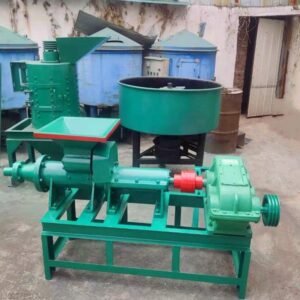
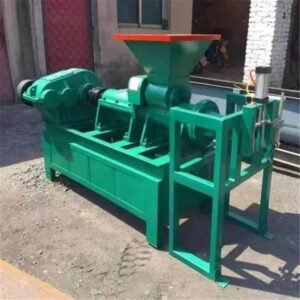
Carbon Powder Forming Machine
It is specially designed for recycling all kinds of powdery carbon materials to eliminate carbon powder accumulation and turn waste into revenue.
Combined with real workshop operation experience, this article elaborates its applicable raw materials, core performance, operation standards and production strengths.
1. Wide Raw Material Compatibility, Multi-purpose & Flexible Molding
This machine features outstanding versatility and can shape all combustible powdery materials without raw material limitations.
Common feedstocks include charcoal powder from charcoal production, coal powder, semi-coke powder, crushed straw powder and all types of biomass carbon powder.
A full range of machine models are available for selection according to daily output and finished shape requirements.
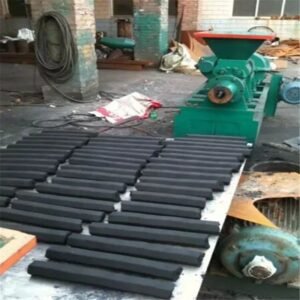
Interchangeable forming dies produce round, square, oval, strip and hookah-specific carbon sticks to satisfy diverse market demands.
Finished briquettes fit domestic heating, barbecue fuel and industrial combustion support scenarios.
2. Core Production Principle – Simplified Workflow with Fewer Procedures
The carbon powder forming machine adopts screw high-pressure extrusion molding technology, the most advanced and simplest process for carbon powder reprocessing.
Its biggest difference from traditional wood briquette extruders: finished briquettes require no secondary carbonization, greatly simplifying production procedures and cutting operating costs.
Since raw materials are pre-carbonized carbon powder, the whole workflow only covers batching & mixing, moisture adjustment and high-pressure extrusion to make sellable carbon sticks directly.
Finished sticks burn smoke-free and odorless with stable calorific value and long burning time, meeting commercial quality standards for instant packaging and sales. The carbonization furnace link is eliminated, enabling zero-basis operators to launch production easily.
3. Practical Operation Standards (Beginner Guide to Avoid Equipment Breakdowns)
Common malfunctions including head blockage, motor burnout and loose fragile briquettes mostly stem from improper parameter setting and uncontrolled raw material moisture. Key operation rules are listed below:
3.1 Pre-operation Full Inspection
Before every startup, fully inspect core components including machine head, spiral blades, bearings and motors. Confirm no jamming, loose parts or damaged accessories. Never run the machine with hidden faults to reduce equipment wear.
Carbon powder forming machine for waste charcoal dust
3.2 Strict Raw Material Moisture Control
Carbon powder forming has strict moisture requirements. Excess moisture causes loose, easily broken briquettes; overly dry materials increase friction, overload the machine and trigger breakdowns. Test and adjust material moisture to the standard range before production.
3.3 Precise Current Control (Critical Standard)
The optimal operating current stays stable at 70–80 Amps during normal production.
Sustained high current indicates excessively dry raw materials. Add appropriate water and mix evenly immediately; forced operation is forbidden.
Long-term over-current operation leads to severe head blockage, accelerated spiral blade abrasion and even motor burnout, resulting in expensive maintenance costs. New operators must monitor the current meter closely and consult technical staff for guidance, following the operation manual strictly.
4. Overall Equipment Advantages Matching Modern Production Needs
After years of market iteration, the machine boasts simple structure, low failure rate and strong durability with minimal later maintenance expenditure, ideal for long-term mass production.
4.2 Eco-friendly Cold Extrusion Process
Cold extrusion molding involves no combustion, smoke, waste gas or wastewater discharge, fully complying with environmental protection standards without production suspension risks.
4.3 High Automation & Labor Saving
Highly automated design allows single-person operation. Untrained workers can master operation after short training without full-time professional technicians, drastically cutting labor expenses.
4.4 Waste Upcycling for Higher Profit Margin
Stockpiled useless carbon powder is processed into high-quality sellable carbon sticks to realize waste recycling, greatly improving raw material utilization rate and total production revenue.
Summary
In terms of practicality, environmental compliance, output and cost performance, the carbon powder forming machine is the optimal equipment for recycling all carbon powder waste.
It perfectly matches small workshop waste reprocessing and large-scale carbon factory mass production.
With simple techniques, stable operation and broad sales channels for finished products, it is essential equipment for charcoal and coal factories to boost output and profit, and the mainstream choice of the waste biomass recycling industry.