
Hazards of Briquette Extruder Overload & Practical Daily Production Operation Guidelines.
Many operators run machines non-stop under overload to rush orders and boost short-term output.
Though daily production rises temporarily, massive hidden risks emerge: frequent breakdowns, drastically shortened equipment lifespan, and later maintenance costs far exceed extra revenue from rushed output.
1. Specific Hazards of Overloaded Briquette Extruder Operation
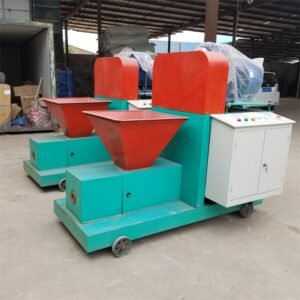
The standard single shift for briquette extruders is 8 hours per day.
After 8 hours of production, the machine must shut down for cooling and full maintenance, which is the safest operating mode.
Operators can extend production for an extra 4 hours at most within the 8-hour standard shift, which is the machine’s load limit.
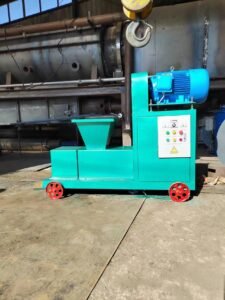
Continuous operation exceeding 12 hours without shutdown, cooling or maintenance counts as severe overload.
-
Accelerated aging and failure of core components
Motors, screw propellers, bearings and reducers run continuously under high temperature and heavy load with insufficient heat dissipation.
Common faults include overheated motors, overload tripping, bearing seizure and rapid screw wear.
Components that normally serve 1–2 years may fail completely within several months under overload.
-
Continuous decline in finished briquette quality
Long-term overload destabilizes machine temperature and running balance, resulting in inconsistent extrusion pressure.
Operators face massive defective products including unformed green sticks, broken sticks, hollow briquettes and loose molding, greatly raising reject rates.
-
Frequent malfunctions delay production
Long fatigue operation widens machine gaps and reduces machining precision.
Constant minor breakdowns lead to repeated shutdowns for repairs.
Rushing output actually slows down overall production progress.
-
No window for routine maintenance
Non-stop operation leaves no time for internal cleaning, lubrication and inspection.
Accumulated material residue, carbon deposits and insufficient lubrication pile up step by step, eventually triggering major failures or complete machine shutdown.
2. Mandatory Core Practical Standards for Daily Production
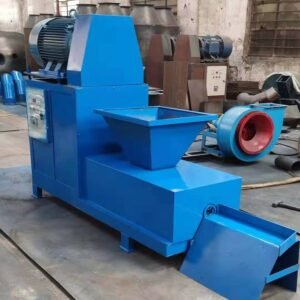
Any irregularity will damage finished appearance and shorten machine service life.
2.1 Complete Preheating Required; Feeding Cold Machine Is Strictly Forbidden
The stable forming temperature range of 260℃–350℃ guarantees dense, high-density crack-free charcoal sticks.
Only feed materials evenly after temperature reaches the standard range and the machine runs smoothly.
Feeding cold equipment directly causes massive defective sticks due to insufficient temperature and unstable pressure, plus accelerated screw wear and material blockage.
2.2 Strictly Control Raw Material Moisture Within Standard Range

Unified industry practical standard: raw material moisture content controlled at 6%–12%.
- Moisture over 12%: Excess internal water leads to cracked, soft and fragile briquettes unfit for carbonization.
- Moisture below 6%: Over-dry materials create heavy friction, causing loose low-density briquettes, accelerated equipment wear and higher power consumption.
2.3 Timely Shutdown Maintenance, Avoid Long-term Fatigue Operation
After daily shutdown, clean internal residual materials, inspect all components and replenish lubricant in time.
Resolve minor faults the same day to avoid accumulation into serious malfunctions.
Summary
Three core factors decide long service life, stable output and low defective rate: reasonable working hours, full preheating before startup and standardized raw material moisture control.