
How to Select Carbonization Furnace by Industry – Complete Practical Selection Guide.
If they only judge equipment by price, they are highly likely to buy mismatched machines.
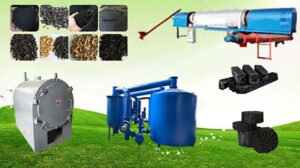
Inconsistencies between furnace capacity, technology, environmental standards and business demands will cause endless production troubles later.
Buyers need to comprehensively compare daily output, floor space, energy consumption, post-maintenance cost and finished carbon technology.
Suitable furnace types vary greatly across different industries.
Furnace Types Corresponding to Different Industries
- Wood carbonization furnace: For forest farms and wood processing factories, to dispose of branches, sawdust and mixed wood offcuts.
- Bamboo carbonization furnace: For bamboo product factories, to process bamboo dust, bamboo joints and bamboo waste.
- Coffee residue dedicated carbonization furnace: For distilleries, agricultural plantations and catering shops, specially for all kinds of food residues.
Different industries have different production targets, so their furnace selection priorities differ entirely.
Below is a detailed breakdown of key selection points by industry.
1. Carbon Manufacturing Industry (Commercial Charcoal & Industrial Carbon Production)
Do not opt for cheap simple earth kilns or small intermittent furnaces.
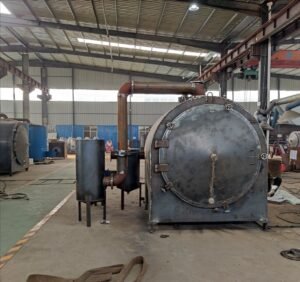
Choose heavy-duty high-performance carbonization equipment with precise temperature control.
2. Biomass Energy Industry
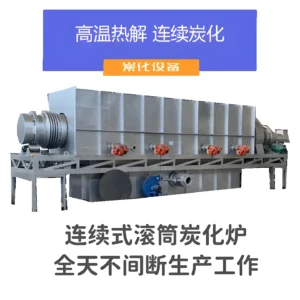
This equipment is equipped with built-in flue gas recycling circulation system.
Combustible gas generated during carbonization is recycled back to the furnace for heating.
No extra coal or firewood is required, greatly reducing overall energy consumption.
3. Solid Waste Environmental Treatment Industry
The No.1 purchasing standard is low pollution and low emission.
No black smoke or odor leaks during operation, fully complying with local EIA standards.
Factories will avoid shutdown rectification due to excessive flue gas, and can steadily undertake various waste disposal projects with full compliance.
Universal Key Selection Standards Applicable to All Industries
- Daily raw material processing tonnage and finished charcoal output, matched with your actual feeding volume to avoid overcapacity or insufficient production capacity.
- Overall equipment floor space and workshop matching dimensions, to plan factory layout without later reconstruction costs.
- Energy utilization efficiency; prioritize energy-saving models with built-in gas recovery to lower daily operating costs.
- Post-operation maintenance difficulty and quantity of vulnerable parts; select equipment with universal spare parts and simple repair procedures to reduce production downtime.
- Internal production technology and worker operation difficulty: simple manual models for small workshops, full-automatic continuous furnaces for large-scale factories.
- Local environmental emission standards; configure supporting purification systems as required, avoid over-spec investment or insufficient configuration violating environmental rules.
Summary
It also controls total investment and daily operating costs, enabling long-term stable production after equipment installation.