
Practical Tips to Boost Coal Briquette Machine Efficiency.
Business owners engaged in coal briquette processing know well that the output of a coal briquette machine directly determines daily workshop production volume and overall profit.
Factories may run identical‑model machines with the same raw materials. Some achieve high output, low waste and non‑stop operation, while others suffer frequent jamming, slow and intermittent briquette discharge. The gap mainly comes from improper operation, insufficient equipment maintenance and poorly‑matched supporting processes.
There is no need to blindly purchase extra new machines to achieve stable high‑yield production and better finished‑product quality. Significant improvements in machine efficiency and briquette quality can be realized by adopting the practical measures listed below.
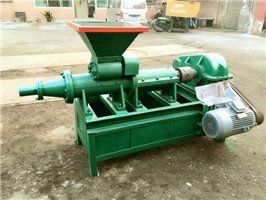
1. Maintain Good Mechanical Condition of Equipment — Foundation for Efficient Production
A coal briquette machine is a high‑pressure extrusion forming device subject to fast component wear under long‑term heavy‑load operation. Poor daily maintenance easily causes material blockage, motor stalling, bearing sticking and insufficient extrusion pressure. Unplanned downtime for repairs disrupts production schedules and cuts total output. Stable high‑efficiency operation becomes impossible.
To keep the machine running productively, follow standardized operating procedures and perform regular maintenance.
- Before startup: Inspect the head, spiral propeller, bearings and moulds for wear.
- After shutdown: Clean residual material inside the machine head to prevent hardened blockages.
- Periodically add lubricant to transmission parts and retighten loose bolts.
Keep the machine in good mechanical condition to minimise breakdown‑caused downtime, enabling long‑term continuous full‑load production. This is the most fundamental and critical step for higher briquette‑making efficiency.
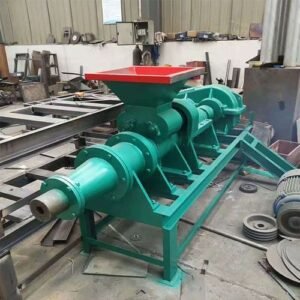
2. Complete Pre‑start Preparation to Avoid Idle Machine Running
Low workshop efficiency often stems from inadequate pre‑production preparation rather than machine defects. Operators sometimes rush to sort raw materials, adjust parameters and align auxiliary equipment only after turning on the main unit. This results in idle running, chaotic production rhythm and extra power consumption, severely disrupting continuous briquette output.
Follow standard on‑site practice and finish all preparations before startup:
- Prepare coal‑powder raw materials in advance. Control material moisture and particle size; avoid uneven moisture and excessive impurities.
- Check electric circuits, machine running status and mould tightness.
- Confirm conveyors and feeding systems work properly before feeding raw materials.
With thorough preparation, the machine starts and immediately produces briquettes steadily without frequent interruptions. Maximise effective production time and raise overall working efficiency.
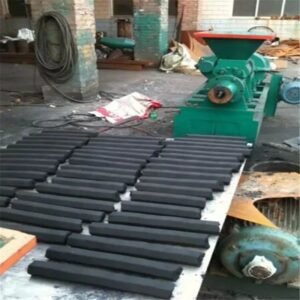
3. Optimize Supporting Equipment for Higher Assembly‑line Productivity
Coal briquette forming is a complete assembly‑line workflow. Although the briquette machine acts as core host unit, high output cannot rely on the main machine alone. Auxiliary equipment including crushers, mixers, belt conveyors and feeding devices greatly influence briquette‑discharge speed.
Poor‑performing supporting equipment will cause insufficient material supply, unqualified feedstock and feeding jams, leading to main‑unit idling and intermittent stops even if the host machine itself is in good shape.
For overall efficiency improvement, ensure auxiliary equipment stays in good working condition:
- Regularly service crushers and mixers to guarantee uniform particle size and consistent moisture after mixing.
- Keep conveyors delivering material at a steady rate without blockages or feed shortages.
Well‑coordinated workflows among all equipment allow the coal briquette machine to run continuously and realise maximum production capacity.
Conclusion
There are no shortcuts to higher coal briquette machine efficiency. Three core principles apply:
- Maintain equipment properly to reduce breakdown‑caused downtime.
- Complete pre‑start preparations to eliminate idle running waste.
- Optimise supporting processes for smooth assembly‑line operation.
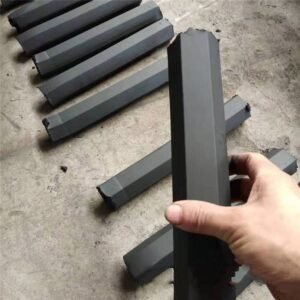
Standard daily operation, careful maintenance and well‑coordinated production workflows will lift briquette output and finished‑product qualification rate, lower production costs and steadily improve overall workshop economic benefits.