
High‑Output Continuous Carbonization Furnace: Practical Operation Introduction.
For manufacturers engaged in large‑scale bio‑char production and harmless solid‑waste treatment, conventional batch‑type carbonization furnaces have obvious drawbacks. They deliver low output, require frequent shutdowns for cooling, consume high labour costs and cannot keep up with large‑volume orders.
The high‑output continuous carbonization furnace is premium industrial‑grade carbonization equipment for mass production. It supports 24‑hour non‑stop fully‑automatic operation with eco‑friendly smokeless performance. It is designed to process diverse fine biomass agricultural and forestry residues. Through high‑temperature oxygen‑free dry distillation pyrolysis, it continuously produces high‑quality bio‑char, coconut shell char and charcoal powder. It is the preferred equipment for plant capacity expansion and formal project commissioning.
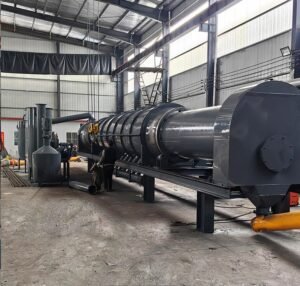
1. Practical Working Principle of the Equipment
This furnace adopts sealed oxygen‑free high‑temperature dry‑distillation pyrolysis technology. Raw materials are not burned by open flame. Carbonization is completed by constant‑temperature thermal decomposition inside the furnace, ensuring stable and safe operation.
The controllable working temperature ranges from 350 ℃ to 850 ℃. Operators can adjust temperature freely according to material type, moisture content and hardness.
During production, fine raw materials are fed into the furnace body evenly, quantitatively and hermetically via screw conveyors or belt conveyors. Inside the furnace, low‑oxygen or oxygen‑free conditions are maintained. Materials go through drying, pyrolysis and carbonization sequentially while moving forward.
After carbonization, high‑temperature hot char automatically enters the dedicated water‑circulation cooling system for fast and safe cooling. This prevents re‑ignition of hot charcoal. Cooled finished char is discharged continuously, realizing genuine non‑stop assembly‑line production.
Combustible flue gas generated during carbonization is collected, purified and recycled back to the furnace as auxiliary fuel. Waste heat is reused to cut energy consumption significantly, achieving self‑sustaining and energy‑saving production.
2. Key Practical Features
2.1 Wide Capacity Range for Industrial‑Scale Production
This is an industrial heavy‑duty unit. Its hourly output covers 0.3 ton to 5 tons. It suits both fine small‑batch production and large‑scale mass manufacturing.
It eliminates the disadvantages of old‑fashioned furnaces, such as batch‑by‑batch operation and long waiting cooling cycles. Stable output is available around the clock. Daily production capacity greatly exceeds traditional furnaces and meets requirements for large‑volume orders.
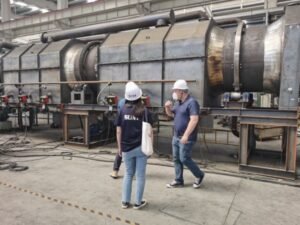
2.2 Oxygen‑Free Pyrolysis for Compliant Smokeless Eco‑Friendly Operation
Sealed oxygen‑free pyrolysis is applied. No open‑flame combustion of feedstock occurs. A complete flue‑gas recovery and purification system is equipped. No black smoke, offensive odour or random exhaust discharge happens.
All pyrolysis flue gas is recycled. It avoids environmental pollution and reduces fuel expenses. The equipment meets local environmental‑protection standards and enables long‑term compliant stable operation.
2.3 Multi‑Purpose Design for Broad Material Compatibility
The furnace works reliably for most common biomass feedstocks: wood chips, sawdust, crop straw, rice husk, bamboo shavings, peanut shells, palm shells, coconut shells and other agricultural‑forestry residues.
Thanks to its wide temperature‑adjustment range, it handles both light soft materials and hard nut‑shell feedstock. Thorough carbonization and uniform final char quality can be guaranteed.
2.4 PLC‑Based Full‑Automatic Intelligent Control to Save Labour
High‑grade PLC intelligent control system precisely regulates furnace temperature, feeding speed, carbonization duration and cooling rhythm.
Frequent manual monitoring and parameter tuning are not required. One‑key startup enables continuous running. Stable parameters keep product quality consistent. Operator skill threshold and labour expenditure are greatly lowered.
3. Wide Application Scenarios
3.1 Resource Recovery of Agricultural and Forestry Residues
Concentrated carbonization of field straw, rice husk, wood chips and other agricultural‑forestry waste. Produced bio‑char and raw materials for charcoal‑based fertilizer can be used for soil improvement, soil loosening and farmland fertilizer retention. It realizes waste‑to‑value conversion and green circular utilization.
3.2 Production of High‑Grade Char Materials
Perfect for premium feedstock such as coconut shell, bamboo shavings and hard wood scraps. It stably manufactures high‑quality coconut‑shell charcoal, bamboo charcoal, water‑treatment charcoal and raw material for activated carbon. Finished products feature well‑developed pore structure and high fixed‑carbon content with good market added value.
3.3 Harmless Treatment of Industrial Solid Waste
Suitable for harmless, volume‑reduction and resource‑oriented treatment of thermally‑decomposable fine industrial solid waste. It supports compliant disposal of industrial waste and satisfies industrial environmental‑protection requirements.
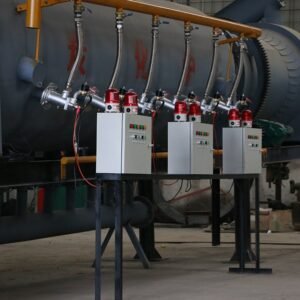
4. Equipment Selection & Configuration Guide
Our high‑output continuous carbonization furnace adopts upgraded high‑temperature gas dry‑distillation carbonization technology. Maximum furnace temperature reaches 850 ℃. It performs better with high‑moisture and high‑impurity raw materials. It solves common problems of ordinary furnaces such as incomplete carbonization for wet feedstock, low throughput and poor char quality.
Hourly capacity is flexible from 0.3 ton up to 5 tons. Multiple specifications are available. Customers can select proper models based on raw‑material types, moisture content and target plant output. It prevents over‑investment or insufficient capacity configuration.
5. On‑Site Operation Precautions
5.1 Safety Production Management
Maintain stable and even furnace temperature during operation. Prevent over‑burned material and excessive equipment wear caused by local over‑heating. Strictly follow sealed‑operation specifications. Avoid oxygen leakage and open‑flame hazards to guarantee safe and stable production‑line performance.
5.2 Periodic Equipment Maintenance
Long‑term heavy‑duty continuous operation requires regular cleaning of carbon deposits inside the furnace. Inspect flue‑gas pipeline patency routinely. Check cooling water‑circulation systems and conveying systems frequently. Timely component maintenance extends service life and prevents unplanned downtime caused by breakdowns.
5.3 Proper Power‑Grid Matching
Large continuous carbonization furnaces consume high power. Core heating components can reach 300 kW. Before plant commissioning, confirm on‑site grid capacity in advance and complete supporting electrical installation. Insufficient power supply will stop the equipment from running at full load.