
Wood Crusher Selection Guide.
Many new business owners make a common mistake when purchasing wood crushers. They believe bigger and more‑expensive models are always better.
For wood crushing processing, there is no universal “best” machine. Only the most suitable one for your conditions matters. Blindly buying large‑size equipment brings high investment costs. You may end up running a big machine for small‑volume jobs, leading to high power consumption and idle waste.
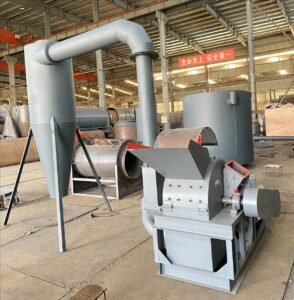
If you only chase low‑price small machines, they may fail to handle raw materials. Frequent blockages and insufficient output will hold back production. To avoid purchasing pitfalls, select equipment according to your real‑world production requirements. Below are three key practical selection tips from the industry, which help new operators pick the right machine easily.
1. Select Model Based on Daily Output, Match Production Rhythm and Avoid Waste
Wood crushers on the market are classified by model numbers. The model directly determines power input, feeding speed and hourly output, to fit processing scenarios of different scales.
For small workshops or individual scattered processing with low daily output requirements, medium‑and‑small models are sufficient. They feature low power consumption, low investment cost and fast return on investment.
For large‑scale processing plants with bulk orders and large stockpiles of raw materials, high‑capacity large‑size crushers are required. Such machines are equipped with higher‑power motors and heavy‑duty cutter discs. They perform well in continuous operation. They can sustain long‑time full‑load production without overheating, frequent jamming or insufficient output.
In short, choose the corresponding model according to your daily processing volume and working hours. It guarantees production efficiency, prevents excess power waste and cuts production costs to the maximum extent.
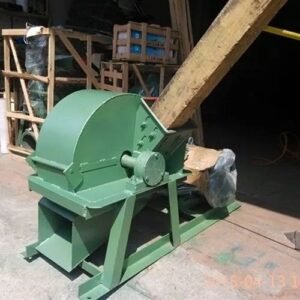
2. Choose Equipment According to Raw Material Properties, Prevent Mis‑selection and Material Blockage
This is the most critical step in equipment procurement. Poor machine performance and frequent breakdowns are mostly caused by mismatch between machine model and feedstock.
Wood materials vary greatly in hardness, thickness and moisture content. They place completely different demands on machine power and crushing structure.
If you mainly process thin branches, small twigs, thin off‑cuts and soft fine wood scraps with low hardness, standard medium‑and‑small wood crushers can handle them effortlessly. They deliver good crushing results with rare blockages and low failure rates.
If you process thick tree trunks, hard miscellaneous wood, thick boards and large‑volume timber, heavy‑duty large‑size wood crushers are a must. These machines adopt thickened cutter discs and wear‑resistant blades with sufficient power. They are specially designed for hard bulky feedstock. They work without jamming or motor stalling, and produce uniform discharge, avoiding incomplete crushing.
Note that material moisture also affects operation performance. For hard and wet large‑size hardwood logs, pick units with adequate power reserve for stable mass production.
3. Select Driving Mode Based On Site Power Supply Conditions for Higher Flexibility
Two main drive types are available for wood crushers in the industry: electric motor version and diesel engine version. There is no difference in crushing quality and output between them. The only distinction lies in applicable working sites. Make your choice based on local power availability.
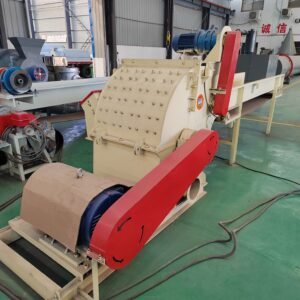
For fixed factory sites with standard three‑phase industrial power supply, electric‑motor‑driven crushers are the priority. Electric units run stably with very low failure rates, simple later‑stage maintenance and low operating costs. They show the best cost‑efficiency for long‑term mass production and are the first choice for stationary processing plants.
For mobile field operations, farm‑side material collection or remote locations without three‑phase power, choose diesel‑powered wood crushers. No power wiring is required. Simply refuel and start working. Featuring good mobility and no power‑source restriction, they are ideal for outdoor mobile processing and on‑site toll processing.
Conclusion
Three core factors govern wood crusher selection: output matching your production demand, model fitting raw‑material characteristics, and drive type suiting site conditions.
Do not blindly pursue oversized models or over‑spec configurations. Select equipment according to your actual processing scenarios. In this way, you can save procurement costs, achieve high‑efficiency production and maintain stable long‑term profits, while avoiding purchasing traps and equipment idling waste.