
Operation Notes for Carbon Powder Briquette Forming Machine.
The carbon powder briquette forming machine is the core forming equipment in the charcoal production line. It features high machining precision and strong extrusion pressure. The standard of daily operation directly affects equipment failure rate, briquette forming rate and service life. Most workshop problems such as broken briquettes, defective briquettes, material blockage, abnormal noise and bearing damage are caused by non-standard operation. Below is a set of practical operation notes widely used in on-site workshops. It covers machine test, feeding, blockage clearing and shutdown maintenance. New operators can get started quickly.
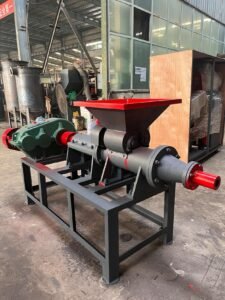
1. Pre-start Inspection: Lubrication and Overall Machine Status (Top Priority)
Never feed materials immediately every time before startup. Complete machine inspection and maintenance must be carried out first. Add lubricating oil to all lubrication points and the reducer. Keep the oil volume appropriate. Insufficient oil will cause component wear, while excessive oil leads to oil leakage and dust accumulation, disrupting machine operation.
Fully check all fixing bolts, head accessories and fastening clips on the machine body. Long-time operation vibration tends to loosen bolts. Tighten all loose bolts to prevent component displacement, shaking and deviation during production.
After all inspections, do not run the machine at full load directly. Carry out jog test first. Start and stop at low speed to check foreign object jamming, smooth operation, abnormal noise and shaking. Also confirm the rotation direction is correct. Only when the machine runs smoothly with no abnormal noise and correct rotation can you start idle running for preheating.
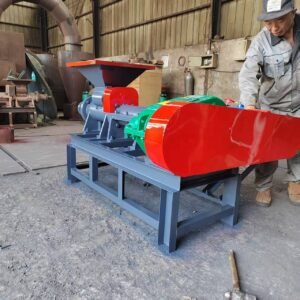
2. Idle Preheating & Uniform Feeding, Control Raw Material Moisture
It is forbidden to feed materials immediately after power-on for new machines. Let the machine idle for 3–5 minutes to run-in components and preheat the machine head, until the whole machine reaches stable working condition. Start trial feeding only after confirming no faults during idle running.
Control feeding speed during trial production. Adopt small-volume, continuous and even feeding. Avoid sudden bulk feeding and material stacking, which will cause motor overload and barrel blockage.
Strictly control the moisture of carbon powder raw materials. The optimal practical standard: squeeze the mixed raw material into clumps by hand; the clump falls apart slightly when released and does not stick to hands. Raw materials at this moisture level produce compact briquettes with low cracking rate and high forming rate. Over-dry raw materials cause broken and loose briquettes. Over-wet raw materials lead to bursting briquettes, material sticking and blockage.
3. Rules for Blockage Clearing: No Hard Metal Tools
Material blockage occasionally occurs at feeding hoppers during briquette production. Follow safety rules for on-site clearing: only use soft materials such as wood strips or bamboo strips.
Never use steel bars, iron rods, spanners or other hard metal tools to clear blocked materials. If metal tools fall into the machine, they will damage the screw propeller and machine head mould severely. This may cause major equipment damage and safety accidents. This is a mandatory workshop safety rule.
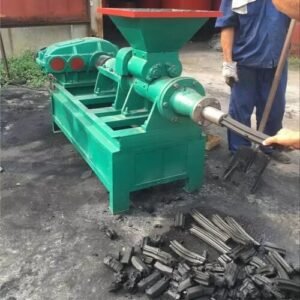
4. Standard Shutdown Procedure: Empty Materials & Clean and Maintain Equipment
Do not cut off power directly to shut down the machine. Improper shutdown causes residual materials inside the barrel to dry and jam the machine head. It will lead to motor overload at next startup, burn the motor and wear the screw shaft in severe cases.
Correct shutdown steps: stop feeding first. Keep the machine running in idle state until all residual materials inside the barrel and machine head are fully extruded and briquette output stops, then cut off power.
After shutdown, dismantle the machine head in time. Clean up hardened carbon powder and residual impurities inside the head, mould and barrel. Reassemble parts after cleaning and protect the machine, so the machine can be started smoothly for the next shift and reduce potential faults.
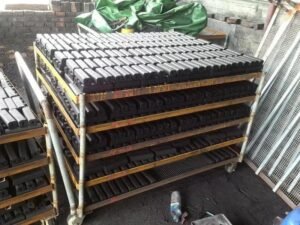
Summary
To maintain low failure rate, good forming quality, long service life and fast return on investment for the briquette machine, the key points are: pre-start inspection, idle preheating, uniform feeding, standard blockage clearing and proper shutdown cleaning. Operation in accordance with these practical standards can effectively avoid material blockage, defective briquettes and equipment damage. It can stabilize production output and finished charcoal quality, and greatly extend the service life of the machine.