
Carbonization Characteristics of Coconut Shell Carbonization Machine.
Coconut shell activated carbon is finely processed from high-quality coconut shells through a series of production procedures. It is black granular material featuring well-developed pore structure, excellent adsorption capacity, high mechanical strength, easy regeneration and cost-effectiveness.
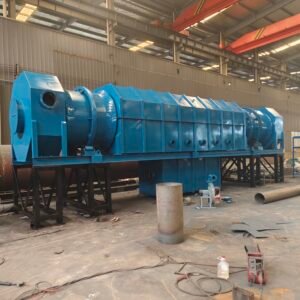
It is widely applied for deodorization and drinking water filtration, serving as a premium water purification material. Coconut shell carbon delivers outstanding performance for activated carbon production. Currently, the market price of activated carbon keeps rising steadily in the carbonization industry. For this reason, coconut shell carbonization machines manufactured by our factory have become essential equipment for carbon production.
The carbonization performance of our coconut shell carbonization machine surpasses that of all conventional carbonization equipment, and its adoption is expanding rapidly across regions. Many clients may not be fully familiar with its carbonization features. Below we summarize the key advantages: low investment cost, high production efficiency and wide raw material adaptability.
Working Principle
The coconut shell carbonization machine uses a biomass gasifier to generate fuel gas. The flue gas produced by the gasifier is purified and cooled to form combustible gas similar to liquefied gas. The combustible gas travels through flue ducts to the bottom of the main carbonization unit for combustion, heating the internal pipes of the host machine. An induced draft fan drives the gas flow throughout this process.
Once the internal temperature exceeds 400°C, raw materials are fed into the main unit. Suitable feedstock includes coconut shells, peanut shells, bamboo shavings, sawdust, crushed hemp stalks, tree bark and other fruit shells under 5 cm in size. Raw materials must be screened and cleaned before feeding.
The upper two layers of pipes inside the machine dry the incoming materials, while the bottom two layers carry out carbonization. After carbonization, the carbon product is discharged via a finished product cooling discharger, then further cooled and conveyed to the finished material bin by a conveyor.
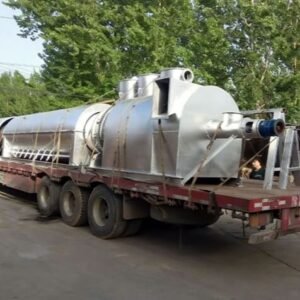
Core Carbonization Technology & Environmental Benefits
This machine adopts advanced technology to recover, purify and recycle combustible gases generated during carbonization, including carbon monoxide and methane, for cyclic combustion.
This technology solves two major pain points of ordinary coconut shell carbonization furnaces:
- Eliminates heavy smoke emissions and associated environmental pollution during carbonization
- Supplies heat required for the carbonization process, achieving self-sufficient energy supply
It improves the continuous operation and economic performance of the equipment. Agricultural and forestry residues are fully recycled and converted into valuable products. This technology supports environmental protection and sustainable development.