
How to Select the Right Drying Equipment for Charcoal Production.
Drying is a critical process. Poor moisture control will cause unshaped sticks, cracking and low-grade charcoal. It seriously affects finished quality and overall output.
Focus on equipment compatibility, energy consumption and drying speed.
Meanwhile, evaluate actual production conditions: raw material moisture, particle size, target dryness and daily output.
Comprehensive selection ensures stable, energy-saving and high-efficiency production.
They differ greatly in applicable scenarios, production capacity, advantages and disadvantages.
Both are suitable for common charcoal raw materials such as wood chips, sawdust, bamboo dust, biomass pellets and wood scraps.
1. Pneumatic Airflow Dryer (For Small Plants & Home Workshops)
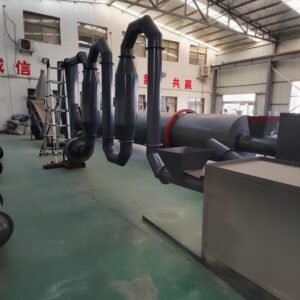
Materials are fully dispersed and suspended in hot air after entering the pipeline.
Every particle makes full contact with hot air without dead zones.
Materials keep tumbling and stirring inside the pipeline, which constantly renews the evaporation surface and boosts dewatering efficiency.
It is perfect for new starters, family workshops and small-batch production, fully meeting the drying demands for small-scale briquette making.
2. Rotary Dryer (For Large Charcoal Plants & Mass Production)
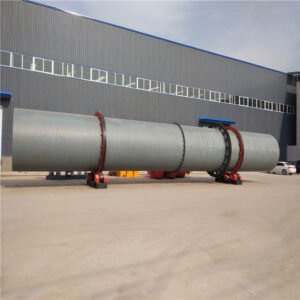
It delivers stable drying quality, large daily output and low overall energy consumption, being the top choice for large-scale production.
During operation, the fan sends mixed hot air and materials into the cyclone to separate materials, airflow and water vapor.
This hot air circulation minimizes heat loss and realizes low-energy and high-efficiency drying.
The output perfectly matches large-scale briquetting and carbonization procedures.
3. Summary of Selection Guidelines
- Choose pneumatic airflow dryer for small startups, home workshops, limited space and low production demand.
- Choose rotary dryer for large factories, high daily output, long-term low-energy operation and strict requirements on uniform drying quality.