
Rotary Drum Dryer: Common Faults, Causes & On-site Practical Solutions.
Introduction
Rotary drum dryer is the main equipment for mass material drying. It is widely used for drying wood chips, mineral powder, coal slime, manure and other raw materials. The machine runs continuously at high temperature with materials loaded inside. Long-term operation easily leads to blockage, drum vibration, under-dried output, smoke, air leakage, transmission abnormal noise and other faults.
Below we list frequent faults encountered in actual production sites. Each part covers fault symptoms, root causes and practical handling methods.
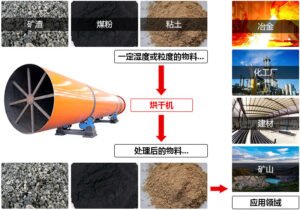
1. Discharged Material Still High in Moisture, Poor Drying Effect
Symptom Materials remain wet after drying and fail to meet process requirements. For materials like wood chips and chicken manure, the surface looks dry but the interior is damp. They cannot directly enter the next production process.
Causes
- Insufficient hot air temperature and inadequate heat supply.
- Overfeeding rate. Materials stay in the drum for too short a time. They are discharged before full dehydration.
- Serious wear of lifting flights. Material scooping and scattering performance drops. Materials clump together and cannot fully contact hot air.
- Too small drum inclination angle. Materials travel too fast inside the cylinder.
- Improper air volume of induced draft fan. Water vapor inside the drum cannot be exhausted and circulates repeatedly.
Solutions Raise hot air temperature gradually; do not heat up sharply at one time. Reduce feeding speed and lower input volume appropriately. Inspect lifting flights; repair or replace worn and deformed parts timely. Fine-tune drum inclination angle to extend material residence time. Adjust the damper of induced draft fan to timely extract evaporated water vapor.
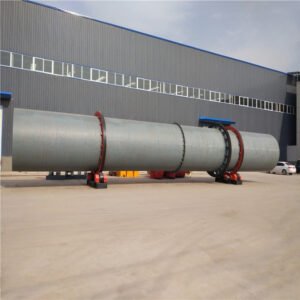
2. Blockage at Feed Inlet, Poor Material Feeding
Symptom Wet materials accumulate in hopper and feeding pipe. Feeding becomes difficult. In severe cases, the inlet is fully blocked. The feeder keeps conveying materials while the dryer runs empty.
Causes
- Excessive moisture of raw materials. Sticky materials adhere to pipe wall and hopper inner surface.
- Too small inclination angle of feeding pipe, less than material angle of repose. High flow resistance.
- Large impurities and long fiber debris stuck at inlet, forming bridging blockage. This problem often occurs in wood chip drying.
- Deformed sealing parts at feed inlet. Cold air leaks in. Condensation forms and sticks materials.
Solutions Pre-treat raw materials in advance, sieve out large impurities. Adjust feeding pipe inclination angle to exceed the material angle of repose. Stop the machine completely before clearing blockage. Never reach into the inlet while machine runs. Clean sticky materials on pipe wall. Install vibrator on hopper if needed to prevent material bridging. Maintain sealing rings at feed end to reduce cold air leakage and condensation.
3. Severe Drum Vibration & Abnormal Operating Noise
Symptom The whole machine shakes heavily during operation. Clanging and friction noises come from supporting rollers. In serious cases, the drum drifts left and right axially.
Causes
- Worn supporting rollers / thrust rollers or unbalanced force on supporting rollers.
- Misaligned supports at both ends of drum, poor coaxiality after installation.
- Worn riding ring surface, thick material scale accumulated on riding ring.
- Loose foundation anchor bolts.
- Uneven material load inside drum; more materials on one side.
Solutions Stop machine and tighten anchor bolts. Clean accumulated materials on riding rings and supporting rollers. Adjust supporting roller position, calibrate drum and control axial drifting. Replace heavily worn supporting rollers and thrust rollers as required. Keep uniform feeding to avoid unilateral material accumulation.

4. Dust & Hot Air Leakage at Seals on Both Ends
Symptom Dust sprays out from sealing rings at feed end and discharge end. Hot air escapes. Heavy dust on site, heat loss and reduced drying efficiency.
Causes
- Seals age and wear after long high-temperature operation. Clearance increases.
- Axial drifting of rotating drum leads to repeated friction against seals.
- Improper negative pressure adjustment inside drum; unstable pressure.
Solutions Stop machine and replace aged sealing rings. Adjust thrust rollers to limit drum axial movement. Regulate induced draft fan to stabilize internal negative pressure and reduce dust leakage. Check sealing positions during routine inspection. Handle minor dust leakage early to avoid aggravated wear.
5. Excessively High Discharge Temperature, Burnt Materials
Symptom Output materials are scorching hot. Material turns black and burnt. Wood chips may emit smoke, bringing fire hazards.
Causes
- Over-high hot air temperature.
- Too little feeding volume. Thin material layer inside drum leads to overheating.
- Insufficient air volume of induced draft fan. Hot air stays inside drum too long.
Solutions Lower outlet temperature of hot air furnace. Increase feeding quantity appropriately. Open induced draft fan damper wider to speed up hot air flow. Stop machine immediately once burnt materials are found. Clean coke deposits inside drum to eliminate fire risk.
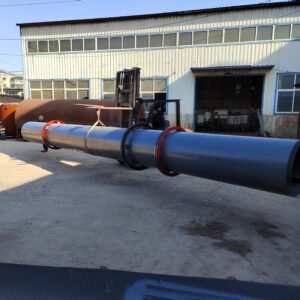
6. Transmission Faults: Motor Overload, Reducer Noise, Worn Chains / Gears
Symptom Motor current is high and trips easily. Buzzing or clicking noise comes from reducer. Transmission chain shakes or jumps off.
Causes
- Material blockage inside drum causes sudden load increase.
- Insufficient lubricating oil or deteriorated oil quality.
- Long-term wear of gears and bearings.
- Misalignment of transmission assembly.
Solutions Shut down machine first and check for internal blockage. Check lubricating oil of reducer and bearings regularly, replace oil on schedule. Calibrate transmission coaxiality. Replace worn components timely. Do not keep running machine with defective parts.
7. Lifting Flights Fall Off or Deform
Symptom Drying efficiency drops obviously. Discharged materials have uneven moisture. Impact sounds can be heard inside the drum.
Causes Long-term high-temperature erosion and material impact. Fixing bolts loosen or corrode, leading to twisted, broken or detached lifting flights.
Solutions Stop machine and enter drum for inspection. Tighten loose bolts. Directly replace deformed and broken lifting flights. Carry out regular inspection to prevent detached flights from scratching the drum body.