
Sorghum Straw Carbonization Equipment Process Introduction
This article introduces the complete carbonization process for sorghum straw.
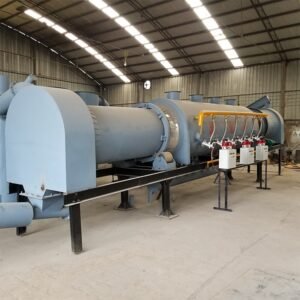
1. Process Overview of Sorghum Straw Carbonization
The whole workflow consists of four key procedures:
drying, crushing, carbonization and cooling.
Meanwhile, the combustible gas generated during production can be recycled and reused.
2. Drying Treatment
to reduce its internal moisture.
before entering the next process.
Low moisture ensures higher carbonization efficiency
and stable quality of finished biochar.
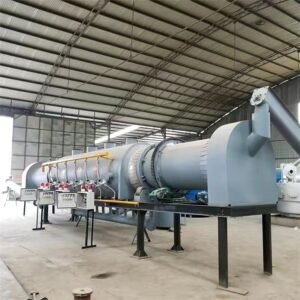
3. Material Crushing
Crushing reduces material size and increases specific surface area,
which facilitates full carbonization in the furnace.
Continuous carbonization furnaces are the ideal choice for straw materials,
with low production cost and large processing capacity.
For this reason, sorghum straw must be crushed in advance.
4. High-temperature Carbonization
Under oxygen-free or low-oxygen environment,
materials are thermally treated at a constant temperature of 300–500°C.
and controllable carbonization time.
Volatile components inside the straw are fully removed,
leaving high-carbon solid biochar.
5. Sealed Cooling Process
This step prevents re-oxidation and spontaneous combustion,
so as to retain higher fixed carbon content.
is equipped with a water cooling system for safe and fast cooling.
6. Application and Value of Sorghum Straw Biochar
6.1 Clean Energy Fuel
with low pollution and high combustion efficiency.
6.2 Economic Benefit
increasing extra income for local farmers.
6.3 Soil Conditioner
It effectively improves soil fertility and farmland crop productivity.