
Carbonization Methods for Charcoal Furnaces|Complete Guide: Dry Distillation & Internal‑Combustion Practical Procedures and Safety Regulations
Producers of machine‑made charcoal and log‑based charcoal all know that carbonization is the most critical step in the whole charcoal‑making process. Poor carbonization control frequently causes under‑carbonized charcoal, over‑burned brittle charcoal, discolored charcoal, and low charcoal yield.
In the market, all charcoal furnaces adopt two core carbonization technologies: dry distillation carbonization and internal‑combustion carbonization. Both processes work for log charcoal as well as machine‑made charcoal rods. Based on field‑production experience, this article explains the complete working procedures, key stage parameters and safety operation standards for both carbonization methods.
1. Overview of Two Mainstream Carbonization Technologies
1.1 Dry‑Distillation Carbonization (Mainstream Eco‑Friendly Process)
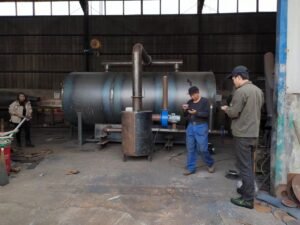
This is the most widely‑adopted process in formal charcoal factories. Carbonization is completed under fully sealed and oxygen‑free conditions. Raw materials never make direct contact with open flame; high‑temperature pyrolysis realizes charcoal formation.
Main advantages: Dense charcoal texture, high carbon yield, smoke‑free & environment‑friendly, consistent product quality. Suitable for high‑grade barbecue charcoal and commercial machine‑made charcoal mass production.
1.2 Internal‑Combustion Carbonization (Traditional Practical Process)
In short, raw materials are partially ignited inside the furnace. Heat required for carbonization comes from partial self‑combustion of feedstock. Seal the furnace afterwards for smoldering carbonization.
This process features easy operation and low initial investment, ideal for small workshops and on‑site processing of local raw materials. Its shortcoming lies in strict fire‑control requirements and relatively unstable charcoal quality.
2. Universal Three‑Stage Carbonization Workflow (Applicable to All Charcoal Furnaces)
No matter which carbonization method you choose, the complete carbonization procedure consists of three mandatory sequential phases: low‑temperature moisture removal, high‑temperature calcination and cooling down. Do not skip or re‑order any step, which is essential for stable charcoal quality.
Applicable feedstock: machine‑made charcoal rods, hardwood logs, wood scraps and other charcoal‑making biomass materials.
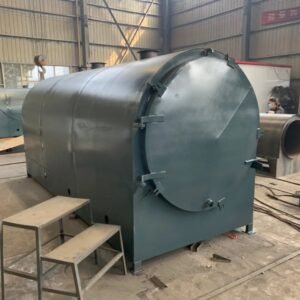
Stage 1: Low‑Temperature Moisture Removal — Foundation of Carbonization
Even after sufficient drying, wood and charcoal rods still retain residual moisture of 8% or higher. Residual moisture is one major trouble source for carbonization.
If you heat up rapidly to high temperature directly, moisture cannot escape thoroughly. It will result in under‑carbonization, hollow charcoal, cracking and high rate of defective finished products.
Keep slow and steady heating at low temperature at this phase. Discharge all internal water vapor of raw materials, and bring moisture content down to the qualified range for subsequent high‑temperature calcination. This step guarantees high final charcoal yield.
Stage 2: High‑Temperature Calcination — Core Charcoal‑Forming Phase
After full moisture removal, raise furnace temperature steadily to enter high‑temperature pyrolysis and calcination. Lignin inside biomass decomposes and releases large volumes of flammable wood gas and smoke.
These combustible gases serve as valuable energy sources. They can be recycled back into the furnace to maintain high working temperature and cut external fuel consumption. Recovered heat can also supply front‑end drying equipment to realize energy recycling and reduce production costs.
Keep the furnace sealed and oxygen‑deficient during high‑temperature operation. Only pyrolysis takes place instead of open burning, to prevent raw materials from burning away.
Stage 3: Cooling Phase — Secure Charcoal Quality & Shape
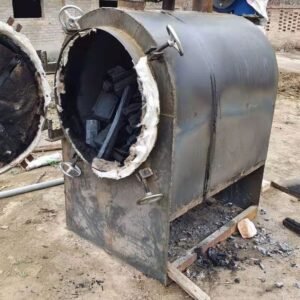
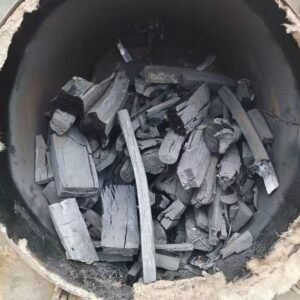
Carbonization finishes when combustible gas is fully released and pyrolysis reactions are completed. Charcoal is formed but stays at extremely high temperature with active thermal status. Never open the furnace immediately.
Two common cooling solutions for industrial production:
- Natural cooling: Keep furnace tightly sealed for static slow cooling. It delivers denser charcoal and better product quality.
- Spray cooling: For high‑output production lines. It shortens cooling cycle and improves working efficiency.
Factories can select cooling mode according to actual production capacity requirements.
3. Critical Safety Operation Rules for Charcoal Discharge
Most fire hazards in charcoal workshops originate from improper discharging operations. Operators must strictly follow the rules below:
- Do NOT open the furnace for discharging right after high‑temperature carbonization. Ventilate properly to release high‑temperature flue gas and residual heat, and wait for temperature drop before charcoal removal.
- Newly‑discharged charcoal may look cool on surface, while inner core still holds hidden high‑temperature embers, which can re‑ignite easily.
- All freshly‑produced charcoal shall be stacked in open‑air outdoor areas for at least 8 hours. Confirm zero re‑ignition risk before bagging, warehousing and stacking to eliminate fire risks.
Summary
All charcoal furnaces rely on either dry‑distillation or internal‑combustion carbonization, matching different factory scales and quality requirements.
The three‑step workflow: low‑temperature moisture removal, high‑temperature calcination and sealed cooling, is the standard procedure for premium charcoal manufacturing. Proper control over temperature, holding time and ventilation in each phase helps achieve high carbon yield, stable charcoal quality, safe workshop operation and better production profit.