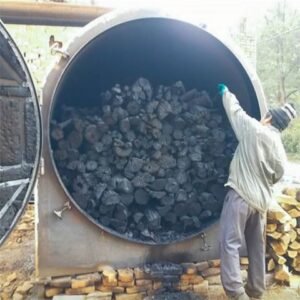
Detailed Working Principle of Charcoal Carbonization Furnace.
Recently, we have received numerous inquiries about carbonization furnaces. Customers use various raw materials, including logs, mixed wood, and machine-made charcoal briquettes processed from sawdust.
Most clients focus on two key questions: which furnace matches their raw materials, and whether different models bring obvious differences in finished quality and operation cost.
Based on practical industry experience, this article explains the core working principle of charcoal carbonization furnaces. It helps new investors and equipment distributors select proper equipment effectively.
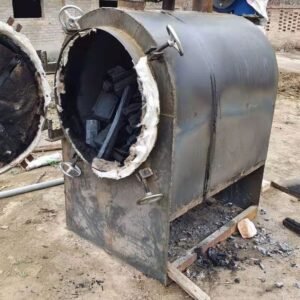
Carbonization Furnace
1. Main Classification of Carbonization Furnaces
Commercial carbonization furnaces are mainly divided into two categories: internally heated carbonization furnace and externally heated carbonization furnace.
For most factories and individual producers, the externally heated type is the most widely used model. It features high cost performance and strong raw material adaptability, becoming the mainstream choice in the industry.
2. Core Working Principle of Externally Heated Carbonization Furnace
The core technology is sealed dry distillation carbonization, which is the standard process for log charcoal and machine-made charcoal production.
The furnace runs in a fully airtight condition with air completely isolated. Raw materials such as wood and charcoal briquettes are heated continuously.
aterials undergo thermal decomposition without open flame combustion. This fundamental working mode guarantees high forming rate and stable charcoal quality.
2.1 Main Products from Carbonization Reaction
During sealed heating, raw materials decompose into three types of outputs:
Solid finished charcoal
Recycled mixed vapor
Combustible flue gas
Mixed vapor flows through pipelines for condensation. By-products like wood tar and wood vinegar are separated and collected for sales to create extra profits.
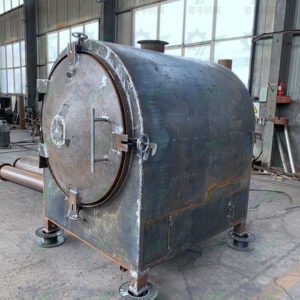
Carbonization Furnace
2.2 Flue Gas Recirculation & Self-heating System
Large volume of combustible flue gas is not discharged directly. It is delivered to the furnace bottom via dedicated circulation pipelines for re-combustion and heat supply.
This self-circulation heating system is the core advantage of the furnace. It replaces traditional coal or wood fuel, greatly cutting fuel cost. Meanwhile, it realizes near-zero flue gas emission and fully complies with local environmental regulations.
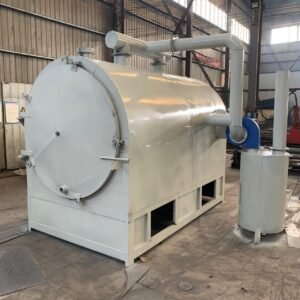
externally heated carbonization furnace
3. Wide Raw Material Compatibility
This universal externally heated carbonization furnace solves the problem of unstable raw material sources.
It works for both log charcoal production and machine-made charcoal processing. One single unit is applicable to logs, mixed wood as well as sawdust briquettes, with no need to purchase separate specialized furnaces.
All-in-one furnace for log and briquette carbonization
4. Application Advantages for Small Producers
For individual workshops, small processing plants and new starters, one furnace supports two mainstream production modes.
It reduces equipment procurement cost, saves floor space and lowers daily maintenance expenses. With excellent flexibility and practicality, it is the top choice for most charcoal manufacturers.