
Horizontal Carbonization Furnace for Log Charcoal: Complete Practical Operation Guidelines (Beginner’s Guide).
Most new operators producing log charcoal face common operational problems with horizontal carbonization furnaces. Faulty loading, moisture removal, temperature control, flame shutdown and cooling will lead to various defects.
Typical failures include completely burnt wood, zero charcoal output, whitened charcoal, low furnace temperature, tar pipe blockage, backfire and smoke leakage, which bring huge safety hazards and economic losses.
Based on years of on-site practical experience, this article summarizes standard operation guidelines for log charcoal production with horizontal furnaces. No empty theories are included. Beginners can follow these steps to produce high-quality log charcoal with high carbon yield. Equipment distributors can also use this document for customer training.

1. Pre-operation Guidelines: Loading, Sealing and Ignition
After equipment installation, fully inspect the whole machine first. Check and fix the furnace body, pipeline interfaces, fans and valves. Ensure all parts are firmly installed with no air leakage or wind seepage.
Standard wood loading is critical. Random stacking causes uneven heating, resulting in partially carbonized and partially raw charcoal.
Professional loading method: Place thick logs and large raw materials at the bottom of the furnace. Arrange thin wood strips and small materials on the upper layer. This layout ensures sufficient bottom fire and smooth ventilation. Thick wood is fully carbonized, while thin materials avoid over-burning and hollowing out, realizing uniform carbonization and consistent finished quality for the whole furnace.
Before ignition, double-check all air ducts and flue gas valves. A common beginner mistake is incomplete valve closure. Air and oxygen entering the furnace will burn wood into ashes with no charcoal left.
Standard operation steps: Open all valves for inspection first. Then fully close all main air ducts and inlet valves to form a sealed oxygen-free environment inside the furnace, and start preheating ignition afterwards.
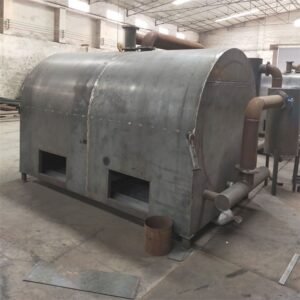
2. Core Control of Heating, Moisture Removal and Self-gasification Stage (Most Critical)
Do not heat fiercely right after ignition. Focus on uniform bottom heating and steady temperature rise. Avoid partial overheating or low temperature that causes uneven carbonization.
The standard moisture removal temperature varies greatly according to wood humidity:
-
Dry wood materials (naturally air-dried, low moisture): Maintain furnace temperature at 250℃–300℃ to completely remove free water and surface moisture.
-
Wet wood materials (fresh unseasoned wood): Adjust temperature to 300℃–450℃ to thoroughly evaporate deep internal moisture.
Key reminder: Never rush the moisture removal stage. Incomplete dehumidification before formal carbonization causes uncarbonized and loose charcoal that breaks easily, with no market value.
After full moisture removal, the furnace temperature rises continuously. Wood undergoes thermal decomposition and produces large amounts of combustible flue gas.
The core advantage of horizontal carbonization furnaces is flue gas recycling and self-combustion. Recycled combustible gas flows back to the furnace bottom through tail pipelines for secondary heating.
Once stable gas production is achieved, self-generated gas can sustain furnace temperature without additional kindling wood. Close the bottom combustion-supporting valves in time to reduce external air intake. Maintain a sealed carbonization environment for constant-temperature production, which saves energy and stabilizes charcoal quality.
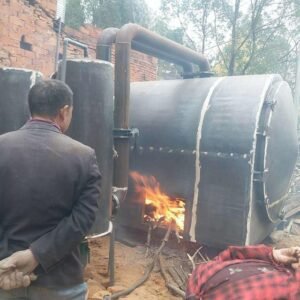
3. Regular Tar Discharge: Prevent Pipe Blockage and Low Furnace Temperature
Wood thermal decomposition continuously produces high-viscosity wood tar and wood vinegar during carbonization. These substances easily adhere to inner pipe walls and cause blockages.
Special tar discharge valves are installed under the fan and at the bottom of flue gas pipelines. These valves are essential for stable equipment operation and must not be kept closed for a long time.
Practical operation rule: Open the discharge valve intermittently throughout carbonization to drain accumulated liquid tar and wastewater. Long-term neglect causes poor flue gas circulation, stagnant carbonization progress, defective charcoal products, and even pipeline pressure buildup and equipment failure.
4. Safety Rules for Cooling Stage (Zero Violation Allowed)
This is the most vital safety rule and the high-risk stage for operational accidents.
Strict prohibition: Do not open the furnace door or ventilate the furnace before carbonization is completed and the temperature drops below 50℃.
The high-temperature oxygen-free furnace interior retains massive residual heat. Opening the furnace in advance allows instant air inflow, causing re-ignition and deflagration of hot charcoal. It easily triggers fire and jet flame accidents.
After carbonization completion, adopt fully sealed natural cooling. Wait until the furnace temperature drops steadily below 50℃ before opening the door for charcoal discharge. Implement full fire prevention measures to eliminate all safety risks.
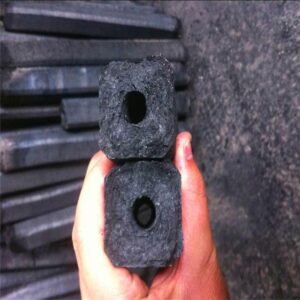
5. Operation Summary
The yield, fuel consumption, finished quality and service life of horizontal furnace log charcoal production depend entirely on standardized operations. Key factors include layered material loading, thorough moisture removal, regular tar discharge and strict cooling management.
Following these standards can produce high-hardness, flawless and fully carbonized log charcoal from dry wood, mixed wood and raw logs. Beginners can achieve stable mass production with low failure rates and easy daily operation.