
Key Factors for High-quality Machine-made Charcoal: Practical Control of Raw Material Moisture & Briquetting Temperature.
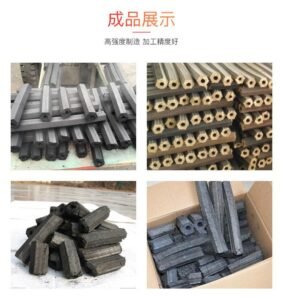
Raw material moisture content and briquetting forming temperature are the two core factors determining briquette forming rate and finished charcoal quality. Most factories producing substandard charcoal fail to control these two critical details.
1. Standard Raw Material Moisture for Briquetting (Top Priority)
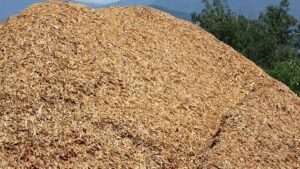
Industry practical standard: Moisture content below 10%, optimal range 6%–10%.
- Excess moisture causes hollow, loose briquettes, slow discharging and frequent machine blockage.
- Over-dry materials create high friction, resulting in loose forming and massive cracked broken briquettes after carbonization.
Cost-saving Pre-treatment Tips
After airing, feed size-qualified materials into the hot air dryer to precisely reduce moisture below 10% before briquetting.
General dryer operating temperature: 140℃–300℃, suitable for most sawdust, bamboo dust, straw and other biomass feedstock.
2. Practical Temperature Control for Briquette Forming
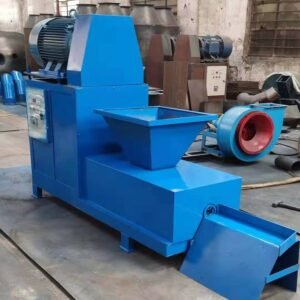
The universal stable barrel temperature for normal production is around 350℃. This temperature rapidly softens wood fibers for tight adhesion, producing dense and smooth green briquettes.
The target standard is crack-free, non-whitened and uniformly formed green sticks; test run to find the optimal temperature range matching your materials.
- Overall drying temperature range: 140℃–500℃, adjustable based on material type and heater model.
- Material discharge temperature: Controlled within 55℃–70℃ by adjusting drying pipeline length and fan air volume. Excess discharge temperature prematurely dries materials and ruins forming performance.
3. Repair & Surfacing Welding Standards for Briquetting Screw Propeller
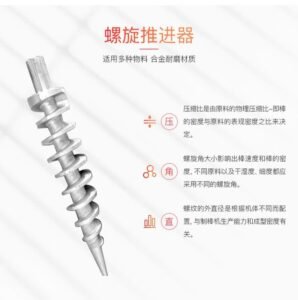
Its abrasion degree and dimensional accuracy directly affect discharging speed, forming stability and continuous production. Delayed repair after abrasion leads to slow output, poor forming and frequent blockages, disrupting production schedules.
- Use special wear-resistant welding rods to enhance component durability and service life.
- Perform layered surfacing according to abrasion loss of the propeller front angle: weld the first layer, remove welding slag completely, then apply the second layer layer by layer.
- Leave a 1–2 mm extra surfacing thickness above standard dimension for post-weld grinding and finishing.
- Full inspection after welding: eliminate defects such as slag inclusion, air holes and uneven surfaces to guarantee smooth rotation and uniform extrusion pressure.
Summary
Stabilize moisture below 10%, match proper forming temperature, and conduct timely propeller maintenance to drastically reduce defective, cracked briquettes.
Finished charcoal features neat appearance, high density and long burning time, bringing better market prices and stable sales channels.