
Regular Maintenance Checklist for Briquette Extruder.
Daily minor maintenance avoids unexpected shutdowns, while systematic periodic maintenance is critical to extend equipment service life, stabilize output and cut major overhaul costs.
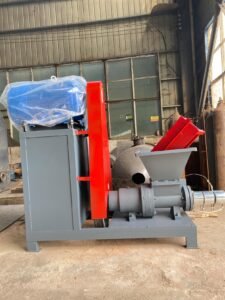
1. Periodic Inspection & Repair of Wearing Parts (Core Maintenance Item)
Long-term material extrusion causes blade thinning, slipping and insufficient extrusion pressure, which directly lowers briquette density.
- Normal production schedule: Inspect every 3–5 days; carry out surfacing repair on worn areas promptly.
- High-output continuous operation (two-shift non-stop production): Inspect and repair every 2–3 days.
Watch for grooves, scratches and reduced smoothness.
Severely worn inner sleeves lead to loose, eccentric and cracked briquettes.
Timely grinding or replacement is required to maintain stable extrusion pressure.
2. Regular Lubrication to Prevent Dry Friction Damage
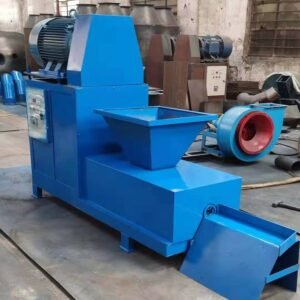
Insufficient lubrication triggers overheated bearings, abnormal noise, jamming and bearing seizure.
Timely refilling and oil change greatly reduce mechanical wear for smoother operation and lower noise.
3. Regular Tightening of Bolts & Structural Components
Prolonged running loosens bolts, shifts the machine base and misaligns the forming sleeve.
main frame fixing bolts, flange screws, foundation anchor bolts and discharge port fasteners.
Retighten all loose hardware.
In serious cases, the sleeve and screw propeller will suffer impact damage.
4. Periodic Inspection & Maintenance of Electric Circuits & Motor
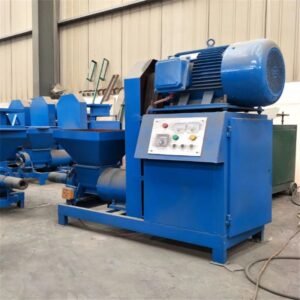
Keep electrical circuits dry and tidy.
Check cables for aging, abrasion and loose connections.
Monitor motor operating temperature and current to avoid prolonged overload operation.
Ensure accurate temperature reading.
Malfunctioning temperature control leads to abnormal heating and poor briquette forming quality.
5. Thorough Periodic Cleaning of Internal Material Deposits
Periodic maintenance requires deep cleaning of hardened powder, damp buildup and solidified debris inside the machine chamber, hopper and forming sleeve.
This creates heavy startup resistance, frequent blockages and defective forming.
Deep cleaning guarantees smooth feeding and stable extrusion pressure.
6. Inspection & Adjustment of Belts and Transmission System
Loose belts slip, causing insufficient power and unstable extrusion speed.
Replace heavily worn belts immediately.
Inspect transmission clearance to ensure stable power transfer without slipping or speed loss.
7. Periodic Calibration of Operating Parameters
Equipment characteristics shift slightly after long continuous running.
Fine-tune parameters periodically to sustain optimal forming conditions and avoid mass production of cracked, hollow or defective briquettes.
Summary
- Timely surfacing and repair of screw propeller
- Systematic equipment lubrication
- Regular tightening of all bolts
- Inspection of motor and electrical circuits
- Deep cleaning of internal material buildup
- Adjustment of transmission belts
- Calibration of production parameters
Stable forming and consistent output help save massive maintenance expenses and production downtime losses.